

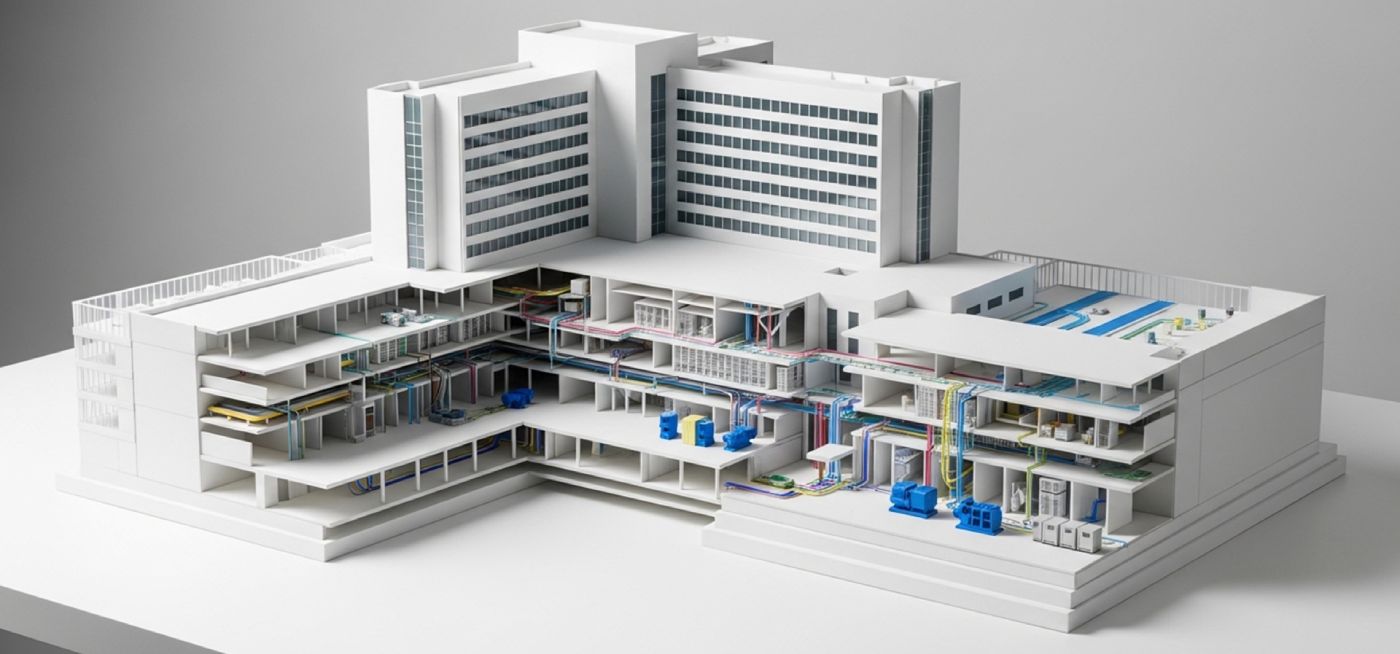
7 Critical Technical Infrastructure Elements When Building a New Hospital
Building a modern hospital involves far more than constructing a physical building. Today’s healthcare facilities require advanced medical technologies, integrated technical systems, and highly reliable infrastructure to ensure safe and uninterrupted clinical operations.
If technical systems are not properly planned from the beginning, hospitals may face operational disruptions, patient safety risks, and increased long-term maintenance costs.
For this reason, clinical engineering, medical technology integration, and technical infrastructure planning must be addressed during the earliest stages of hospital design and development. Below are the seven most critical technical infrastructure elements to consider when building a new hospital.
1. Electrical Infrastructure and Uninterrupted Power Supply
Hospitals are among the most energy-dependent facilities, where even a short power interruption can create serious risks. Critical areas such as operating rooms, intensive care units, imaging departments, and life-support systems rely on continuous electrical supply.
A well-designed hospital electrical infrastructure should include:
- Redundant power distribution systems
- Backup generators
- Uninterruptible Power Supply (UPS) systems
- Dedicated power lines for critical medical equipment
These systems not only prevent downtime but also protect sensitive medical equipment and ensure continuous patient care.
2. Medical Gas Systems
Medical gas infrastructure is a vital component of hospital operations. Oxygen, medical air, vacuum systems, and nitrous oxide are essential for many clinical procedures and patient treatments.
A properly designed medical gas system:
- Ensures uninterrupted gas supply
- Supports intensive care and operating room functions
- Improves patient safety
- Complies with national and international healthcare standards
Installation, testing, and certification of these systems should always be performed by experienced clinical engineering teams to guarantee safety and reliability.
3. HVAC and Sterile Environment Systems
Air quality in hospitals is not only about comfort—it is a crucial factor in infection prevention and control. Areas such as operating rooms, intensive care units, and sterile processing departments require specialized HVAC (Heating, Ventilation, and Air Conditioning) systems.
These systems are designed to:
- Maintain positive and negative pressure environments
- Filter air through HEPA filtration systems
- Control airborne contaminants and microorganisms
- Maintain sterile conditions for surgical procedures
Effective HVAC design significantly reduces hospital-acquired infection risks and improves patient outcomes.
4. Medical Equipment Planning and Integration
Medical devices and diagnostic equipment are central to hospital operations. However, medical technology must not only be installed—it must also be fully integrated into the hospital’s infrastructure.
Key considerations include:
- Equipment space planning
- Power requirements
- Network connectivity
- Data and system integration
When managed through a clinical engineering approach, hospitals benefit from improved equipment performance, smoother workflows, and optimized operational efficiency.
5. Hospital IT and Data Infrastructure
Modern hospitals generate and process vast amounts of clinical data every day. From electronic medical records to imaging systems and patient monitoring platforms, healthcare facilities depend on strong digital infrastructure.
Essential components include:
- Hospital Information Management Systems (HIMS)
- PACS and medical imaging systems
- Secure data storage and backup systems
- Advanced cybersecurity infrastructure
A well-designed IT ecosystem allows healthcare professionals to access patient information quickly, supporting faster and more accurate clinical decision-making.
6. Patient Monitoring and Alarm Systems
Patient safety is a top priority in healthcare facilities, particularly in critical care environments. Centralized patient monitoring systems allow healthcare professionals to track patients’ vital signs continuously.
These systems provide:
- Real-time monitoring of vital parameters
- Early detection of critical changes in patient condition
- Immediate alarm notifications for medical staff
- Better coordination across hospital departments
Central monitoring solutions help improve patient safety while enhancing the efficiency of clinical teams.
7. Clinical Engineering and Technical Management
Ensuring that all hospital systems operate efficiently over time requires a strong clinical engineering management structure.
Clinical engineering teams are responsible for:
- Medical equipment lifecycle management
- Preventive maintenance and calibration
- Technical risk management
- Performance optimization of medical devices
By implementing a structured clinical engineering framework, hospitals can increase patient safety while also controlling operational costs and extending the lifespan of medical equipment.
Technical infrastructure planning plays a critical role in the successful development and operation of modern hospitals. From electrical systems and medical gas networks to HVAC solutions and medical equipment integration, every component must be carefully designed and implemented.At Uniarch Clinical Engineering, we provide end-to-end engineering solutions for healthcare facilities, supporting hospitals throughout planning, installation, and technical management processes. Our goal is to build reliable, sustainable, and future-ready healthcare infrastructures that ensure safe and efficient patient care.


